
How Monsoon Seasons Affect Countries Across Asia
This article delivers an expert meteorological analysis of Asia’s monsoon systems, examining the atmospheric mechanics behind seasonal wind reversals, precipitation distribution, agricultural impacts, and extreme weather risks across the continent.
The Meteorological Mechanics of the Asian Monsoon
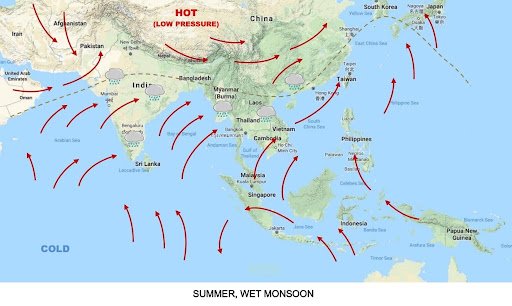
The Asian monsoon is the planet’s most powerful seasonal weather phenomenon, characterized by a complete seasonal reversal of prevailing wind patterns. This planetary scale circulation is driven by differential thermal heating between the vast Asian landmass and the adjacent Indian and Pacific Oceans.
During summer, the Asian continent heats rapidly, creating a massive atmospheric low-pressure zone. Moisture-laden ocean winds rush inland to fill this void, initiating the wet summer monsoon. In winter, the process reverses as the landmass cools quickly, generating high pressure that drives dry, cold continental winds outward toward the ocean.
The South Asian Monsoon: Lifeblood and Hazard for India and Neighbors
In South Asia, the southwest summer monsoon typically spans from June to September, delivering over seventy percent of the region’s total annual rainfall. Countries such as India, Bangladesh, Nepal, and Pakistan depend heavily on these seasonal rains to replenish reservoirs and sustain agricultural production.
However, the South Asian monsoon is a double-edged sword. When monsoonal depressions intensify, excessive precipitation causes catastrophic flooding along major river basins like the Ganges and Brahmaputra, displacing millions of residents and triggering widespread destruction of property and agricultural crops.
The East Asian Monsoon: Shaping Climate in China, Korea, and Japan
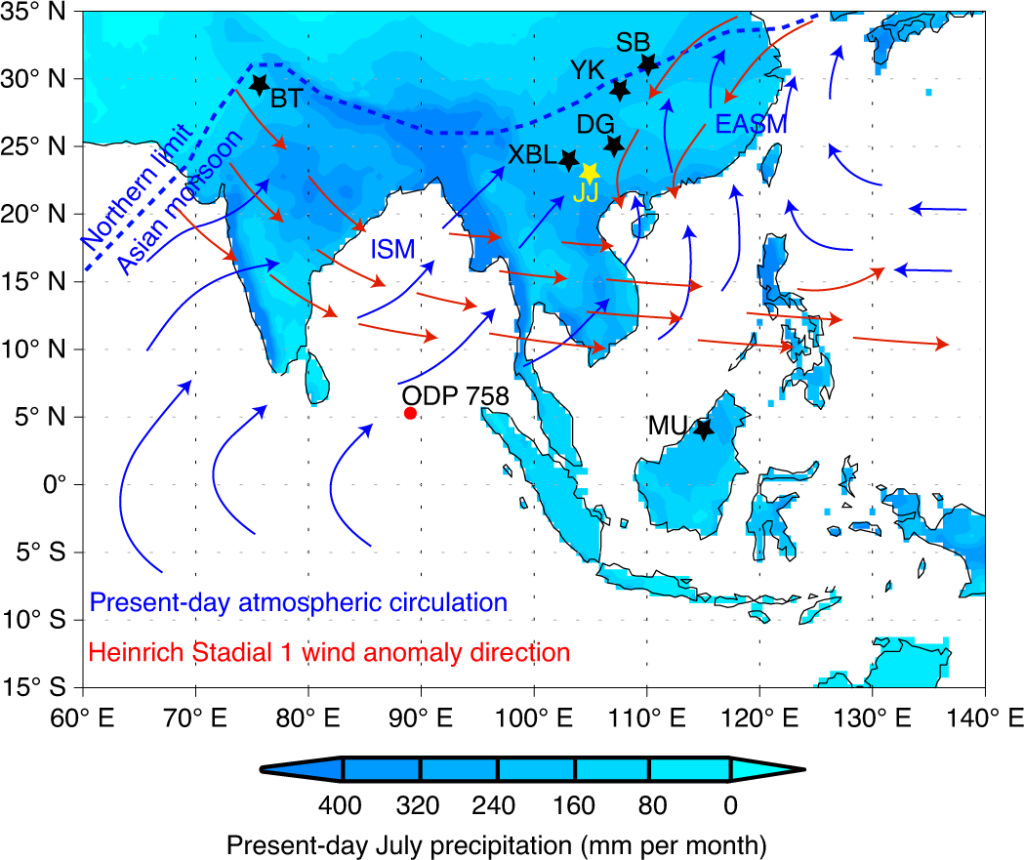
The East Asian monsoon system operates independently from its South Asian counterpart, extending its influence across China, the Korean Peninsula, and Japan. The summer branch moves warm, humid air northward from the South China Sea and Western Pacific, creating a distinct rain belt known locally as the Meiyu, Changma, or Baiu front.
This seasonal rain band delivers essential water resources for regional rice cultivation across Eastern China and Japan. Conversely, the winter East Asian monsoon drives icy Siberian winds southward, bringing severe cold snaps, heavy snowfall to northern regions, and dry atmospheric conditions to the coastal lowlands.
=> Get the latest, accurate weather updates for Vietnam today, broken down by region: Thời tiết thành phố long xuyên
Southeast Asia: Dual Monsoon Systems and Agricultural Cycles
Southeast Asian nations experience complex weather dynamics governed by both the Southwest and Northeast monsoons. The Southwest Monsoon, active from May to October, brings heavy tropical downpours and high atmospheric humidity to Myanmar, Thailand, Vietnam, and the Philippines.
How Monsoon Seasons Affect Countries Across Asia
From November to March, the Northeast Monsoon reverses the flow, bringing drier air to mainland Southeast Asia while dropping substantial rainfall on eastern coastal areas and maritime islands. Agriculture across the region, particularly paddy rice farming, is meticulously scheduled around these predictable seasonal rainfall shifts.
Agricultural Resilience and Water Resource Management
The arrival and intensity of monsoon rains dictate economic stability and food security for over three billion people across Asia. Millions of farming households schedule crop planting cycles precisely around the onset of seasonal monsoon rains.
A delayed or deficient monsoon leads to severe agricultural droughts, reduced crop yields, and heightened economic distress. Conversely, well-distributed monsoon rains fill hydroelectric reservoirs, replenish groundwater aquifers, and boost national economic outputs across agricultural-dependent developing economies.
Climate Change and Monsoon Volatility
Global climate change is altering traditional monsoon dynamics, increasing precipitation variability and extreme weather frequency across Asia. Warmer sea surface temperatures enhance atmospheric moisture capacity, leading to short bursts of torrential rainfall interspersed with prolonged dry spells.
These intensified monsoon anomalies elevate the frequency of flash floods, massive landslides, and urban inundation events. Understanding and predicting these shifting monsoonal patterns through advanced meteorological modeling is crucial for regional climate adaptation, infrastructure design, and emergency preparedness.
Conclusion
The monsoon season is the dominant climatic driver across Asia, shaping environmental landscapes, agricultural productivity, and human society. Driven by seasonal land-ocean temperature contrasts, monsoon winds redistribute vast quantities of moisture across South, Southeast, and East Asia. While monsoonal rains sustain vital water resources and regional food security, their increasing volatility poses significant hazards. Enhancing meteorological forecasting, water infrastructure, and disaster management capabilities remains essential for building climate resilience in monsoon-dependent nations.
Thoitiet360.me – Weather forecast for Vietnam’s 63 provinces and cities:
Thời Tiết 360 was established with the mission of providing accurate, timely, and easy-to-understand weather forecasts to everyone in Vietnam. We believe that accurate weather information not only helps you plan your day but also safeguards your family’s health and property.
1. Nationwide Coverage: Detailed weather forecasts for all 63 provinces and cities, ranging from the provincial level down to the commune and ward levels.
2. High Accuracy: Utilizes data from multiple reputable sources, continuously updated 24/7.
3. Multi-Platform Access: Accessible anytime, anywhere via computers, smartphones, and tablets.
Website: https://thoitiet360.me/
Email: support@thoitiet360.me